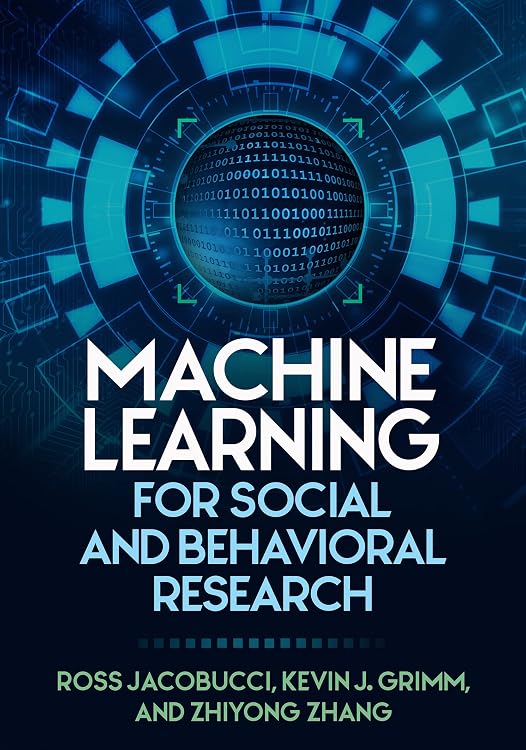
Machine Learning for Social and Behavioral Research
Machine Learning for Social and Behavioral Research is a book on applying machine learning to social and behavioural data. It covers foundational principles and methods for univariate and multivariate analysis, alongside text and social network data, with examples using R scripts and data made available through a companion website.
At a glance
- Explains machine learning concepts through examples using real data, including the Big 5 Inventory and early childhood learning.
- Covers factor analysis, structural equation models and mixed-effects models, as well as text and social network analysis.
- Discusses heterogeneity, measurement error, regularisation and decision trees.
- End-of-chapter sections discuss computational time, resources and key R packages. The companion website provides R scripts and example data.
Pros and cons
Pros
- Brings machine learning methods together with social and behavioural research questions and theory.
- Covers a broad mix of statistical, text and social network analysis methods.
- Companion scripts and data are described as available for following the book's examples.
Technical specifications
9 specifications| Publisher | THE GUILFORD PRESS |
|---|---|
| Publication date | 10 August 2023 |
| Edition | 1st |
| Language | English |
| Print length | 416 pages |
| ISBN-10 | 1462552927 |
| ISBN-13 | 978-1462552924 |
| Dimensions | 17.78 x 1.92 x 25.4 cm |
|---|---|
| Weight listed | 735 g |
Who is it for?
A good fit for
- Social and behavioural researchers looking to build skills in analysing complex datasets with machine learning.
- Readers who want an introduction to methods spanning statistical models, text and social network data.
Frequently asked questions
What topics does the book cover?
It covers machine learning principles and methods for univariate and multivariate data, including factor analysis, structural equation models and mixed-effects models. It also addresses text and social network analysis.
Does it include R materials?
The listing says the companion website provides R programming scripts and data for the book's examples. It also describes chapter sections discussing relevant R packages.
How long is the book?
The listing gives a print length of 416 pages.