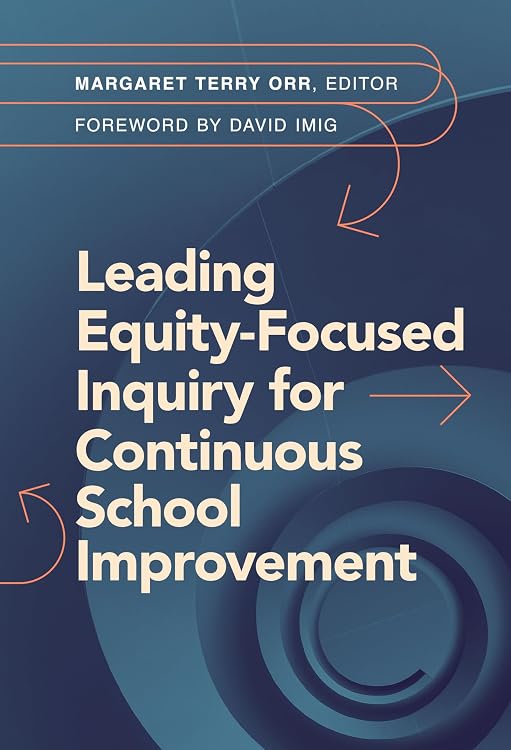
Leading Equity-Focused Inquiry for Continuous School Improvement
Leading Equity-Focused Inquiry for Continuous School Improvement presents an improvement-science-informed roadmap for school and district teams working on persistent educational challenges. Its eight K–12 case studies cover literacy, maths, special education and social learning, with inquiry tools and discussion prompts to help readers consider how the approaches may apply in their own settings.
At a glance
- Eight case studies span varied K–12 school and community settings.
- Cases address literacy, maths, special education and social learning needs.
- Fishbone and driver diagrams and Plan-Do-Study-Act cycles illustrate the inquiry process.
- Reflection prompts and discussion questions support individual study, education courses and book groups.
Pros and cons
Pros
- The case-based format connects improvement processes with specific school and district problems.
- Coverage across multiple school levels and student needs offers varied examples for education leaders.
- Each case includes reflections and questions that can prompt discussion and adaptation.
Technical specifications
8 specifications| Publisher | TEACHERS COLLEGE PRESS |
|---|---|
| Publication date | 22 January 2026 |
| Language | English |
| Print length | 208 pages |
| ISBN-10 | 0807787728 |
| ISBN-13 | 978-0807787724 |
| Weight listed | 295 g |
|---|---|
| Dimensions | 15.56 x 1.04 x 22.86 cm |
What to know before buying
Listing details to confirm
The publisher's description presents school-improvement approaches and cases. It does not establish that the described methods will produce the same outcomes in every setting.
Who is it for?
A good fit for
- School and district leaders exploring equity-focused continuous improvement.
- Teachers and education staff interested in collaborative inquiry and improvement science.
- Education courses and book study groups looking for case-based discussion material.
Frequently asked questions
What does the book cover?
It describes continuous school-improvement work through eight cases involving literacy, maths, special education and social learning across different K–12 settings.
What tools are shown in the cases?
The description says the cases use fishbone and driver diagrams and Plan-Do-Study-Act cycles to illustrate the improvement process.
Can it be used for group study?
The book includes reflection and discussion questions intended for individual readers, education courses and book study groups.