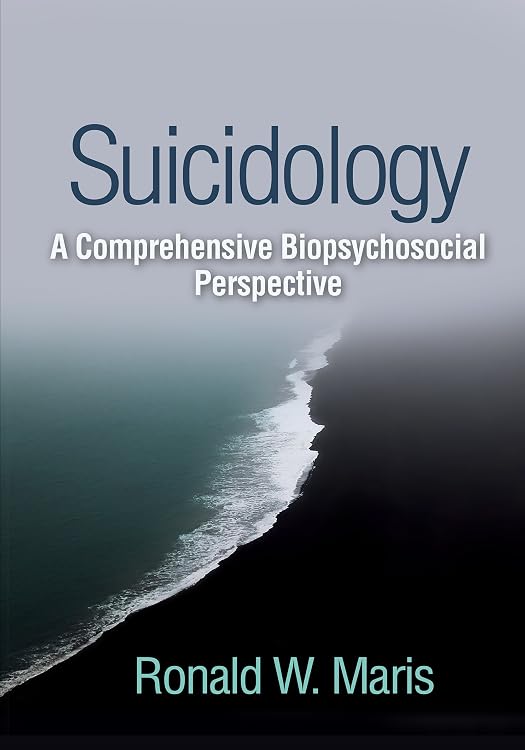
Suicidology: A Comprehensive Biopsychosocial Perspective
Suicidology: A Comprehensive Biopsychosocial Perspective examines suicide, prevention and intervention through research from multiple disciplines. Its coverage ranges from assessment and risk factors to treatment, support for people bereaved by suicide and professional liability, with teaching features including cases, figures and tables.
At a glance
- Discusses suicide classification, prevalence and assessment, alongside self-destructive behaviours.
- Examines risk factors spanning demographic, personal, psychiatric, neurobiological, social and cultural dimensions.
- Covers medical and psychosocial approaches to treatment and prevention, support for people bereaved by suicide, and professional liability.
- Includes text boxes, figures, tables, clinical cases and examples from literature and popular culture.
Often bought together

Pros and cons
Pros
- Broad, multidisciplinary coverage can suit readers seeking more than a clinical or social-science perspective alone.
- Teaching-oriented cases, figures and tables provide varied ways to engage with the material.
- Includes prevention, intervention and bereavement support as well as assessment and risk factors.
Technical specifications
9 specifications| Publisher | THE GUILFORD PRESS |
|---|---|
| Publication date | 9 May 2019 |
| Edition | Comprehensive |
| Language | English |
| Print length | 554 pages |
| ISBN-10 | 1462536980 |
| ISBN-13 | 978-1462536986 |
| Dimensions | 17.78 x 3.02 x 25.4 cm |
|---|---|
| Weight listed | 1.15 kg |
Who is it for?
A good fit for
- Students studying suicide prevention, mental health or related clinical and social-science fields.
- Clinicians and researchers seeking a broad reference on suicide assessment, treatment and prevention.
- Readers interested in bereavement support and professional liability in the context of suicide.
Less suited to
- Readers seeking a brief introduction or a practical guide limited to one intervention approach.
Frequently asked questions
What topics does this book cover?
It addresses suicide classification, prevalence and assessment, risk factors across individual and broader social contexts, treatment and prevention, bereavement support, and professional liability.
Does the book include teaching materials?
The listing describes text boxes, figures, tables, clinical cases, and examples from literature and popular culture.
Who may find this book useful?
Its broad research and clinical coverage may be relevant to students, clinicians and researchers studying suicide and related mental health topics.