 1 / 2
Product guide
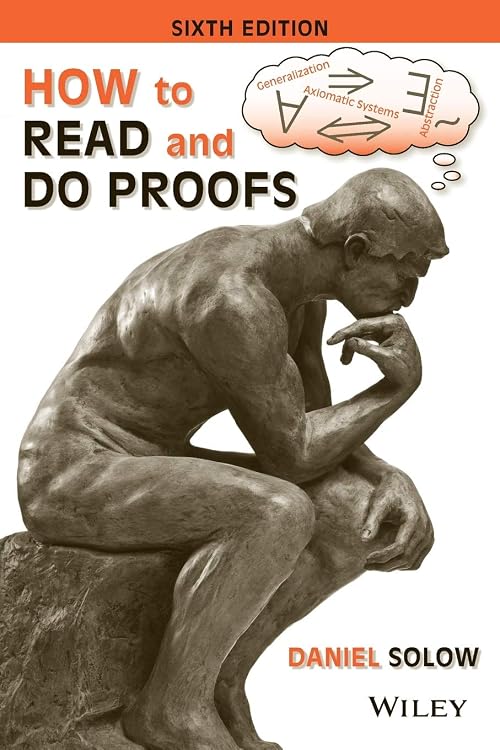
How to Read and Do Proofs: An Introduction to Mathematical Thought Processes
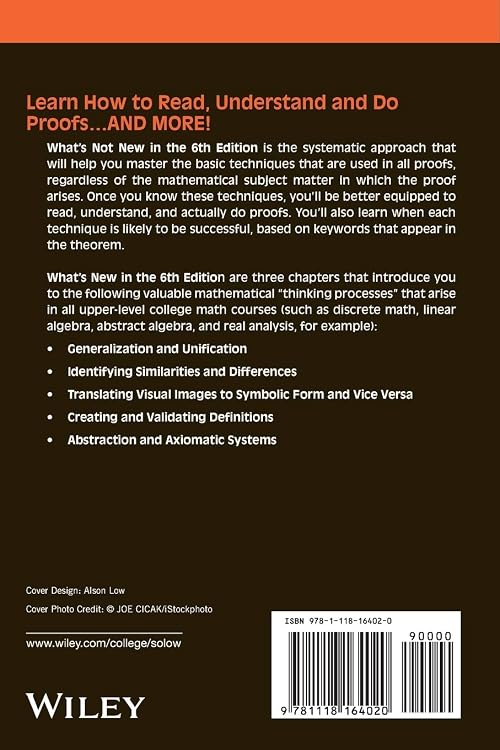
Introduction Mathematical Thought Processes: How to Read and Do Proofs is a 6th-edition mathematics text that introduces systematic ways to understand and construct proofs. It groups recurring proof techniques and explains when key words in a problem may point towards a technique, making it relevant as a supplement for undergraduate and graduate study.
At a glance
- Organises recurring proof techniques into categories and explains how to identify and understand them.
- Connects clues in problem wording with techniques that may suit the proof task.
- Presented as a supplement for undergraduate and graduate students.
Often bought together
Pros and cons
Pros
- The technique-focused approach may help readers choose a proof strategy deliberately rather than relying on trial and error.
- Its stated undergraduate and graduate audience makes it suitable for students looking for additional proof-method support.
Technical specifications
9 specifications| Publisher | Wiley |
|---|---|
| Edition | 6th |
| Publication date | 19 July 2013 |
| Language | English |
| Print length | 336 pages |
| ISBN-10 | 9781118164020 |
|---|---|
| ISBN-13 | 978-1118164020 |
| Weight listed | 64 g |
|---|---|
| Dimensions | 14.99 x 0.51 x 22.35 cm |
Who is it for?
A good fit for
- Undergraduate or graduate students seeking a supplementary introduction to mathematical proof techniques.
- Readers who want guidance connecting problem wording with possible proof approaches.
Less suited to
- Buyers seeking a broad mathematics textbook rather than a focused guide to reading and constructing proofs.
Frequently asked questions
What does this book focus on?
The listing describes a systematic approach to reading, understanding and writing proofs, with recurring techniques organised and explained.
Who is it intended for?
It is described as a supplement for undergraduate and graduate students.
How does it help readers choose a proof technique?
The listing says it explains how key words in a problem can indicate which technique may be appropriate.
Alternative options
Book of Proof
$58.75
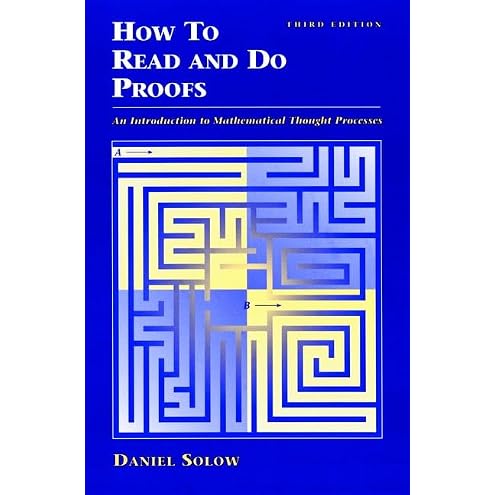
How to Read and Do Proofs: An Introduction to Mathematical Thought Processes
$162.36
Basic Mathematics
$73.89
How to Solve it: A New Aspect of Mathematical Method
$24.99
Learn to Read. Level 3.: For kids 4-8
$24.41
Learn to Read. Level 4.: For children 4-8 years old
$23.85
Learn to Read. Level 9: For kids 6-8 years old
$28.98
Products with discounts that might interest you
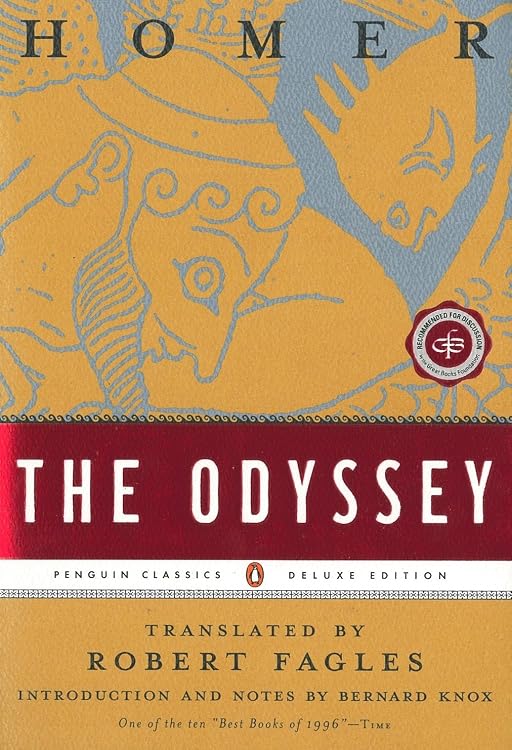













$144.83$219.95
Save 34%