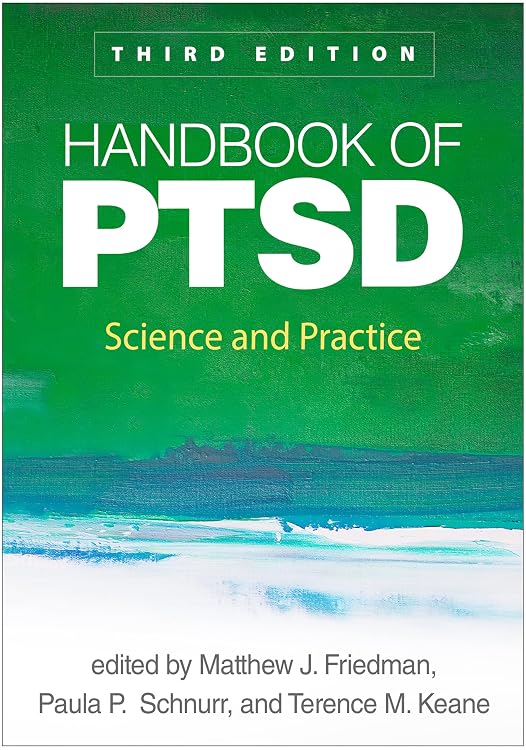
Handbook of PTSD, Third Edition: Science and Practice
The Handbook of PTSD, Third Edition: Science and Practice is a revised reference covering current research and clinical approaches to posttraumatic stress disorder. Its stated scope includes assessment, early intervention, therapies, diagnostic issues and topics such as PTSD with comorbid disorders, refugee treatment and telemental health.
At a glance
- The listing describes an extensively revised third edition with 65% new material.
- Coverage includes mechanisms and risk or protective factors across development and in specific populations.
- Topics include assessment, early intervention, individual, couple/family and group therapies, and diagnostic criteria.
- New or updated coverage includes PTSD with comorbid disorders, postmortem brain banking, resilience, refugees and technology-based interventions.
Reference price: $175.00
Price checked: 18 Nov 2026
View offerAhead of Black FridayExplore the selectionOften bought together
Pros and cons
Pros
- Broad reference scope spans PTSD research, assessment, diagnosis and multiple therapy formats.
- The listed updates address clinical and research topics including comorbidity, telemental health and implementation of best practices.
Technical specifications
9 specifications| Publisher | THE GUILFORD PRESS |
|---|---|
| Edition | 3rd ed. |
| Publication date | 1 February 2024 |
| Language | English |
| Print length | 670 pages |
| ISBN-10 | 1462553788 |
| ISBN-13 | 978-1462553785 |
| Weight listed | 1.16 kg |
|---|---|
| Dimensions | 17.78 x 3.02 x 25.4 cm |
Who is it for?
A good fit for
- Clinicians and researchers seeking a broad reference on PTSD science and evidence-based assessment or treatment.
- Readers looking for coverage of diagnostic frameworks, resilience, comorbidity or technology-based interventions.
Less suited to
- Readers seeking a brief introductory guide or a dedicated step-by-step manual for one therapy.
Frequently asked questions
What topics does this handbook cover?
The listing describes coverage of PTSD mechanisms, risk and protective factors, assessment, early intervention, therapies, diagnostic issues and research questions.
What is new in the third edition?
The listing claims 65% new material, including topics such as PTSD with comorbid disorders and postmortem brain banking, plus updated discussion of diagnostic criteria, resilience, refugees and technology-based interventions.
Is this a practical manual for one PTSD therapy?
It is presented as a broad reference covering multiple therapy formats and clinical topics, not as a dedicated step-by-step manual for a single therapy.