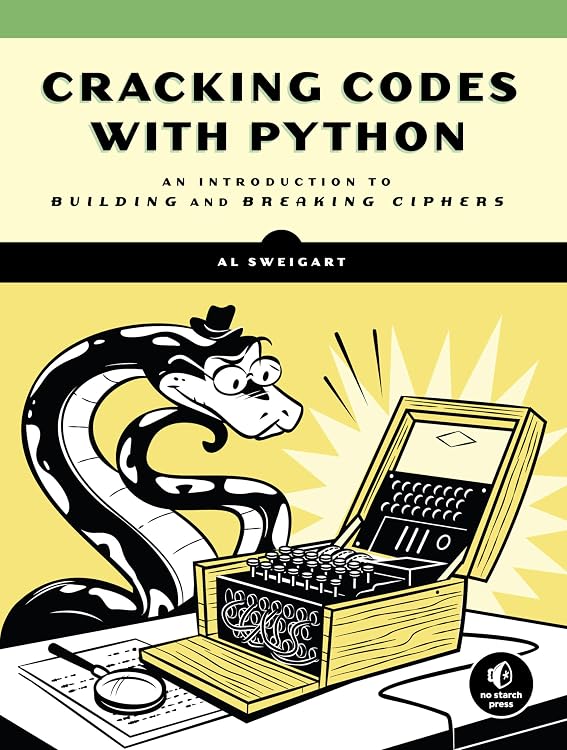
Cracking Codes with Python: An Introduction to Building and Breaking Ciphers
Introduction: Cracking Codes with Python is an illustrated book that teaches Python programming through building and breaking ciphers. It starts with programming basics and progresses through classical ciphers to an example of public-key cryptography, with code and line-by-line explanations.
At a glance
- Designed for readers with no programming experience required, according to the listing.
- Teaches Python through programs for reverse, Caesar, transposition, Vigenère and affine ciphers.
- Covers brute-force and frequency-analysis methods for breaking ciphers.
- Includes full program code and line-by-line explanations, according to the listing.
- Covers loops, variables, flow control, dictionary-file checks and tests for encryption and decryption code.
Often bought together
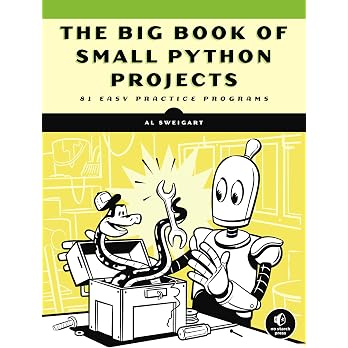
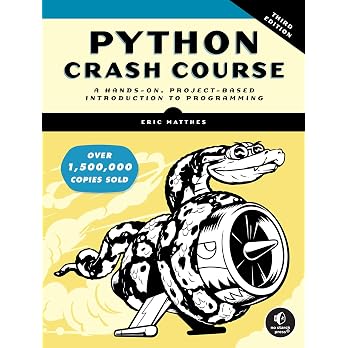
Pros and cons
Pros
- Connects beginner Python concepts to practical cipher-building and codebreaking projects.
- The progression from basic programs to modular arithmetic and public-key cryptography gives learners a range of topics to explore.
- Customer feedback describes the book as comprehensive, well-structured and engaging.
Cons
- The examples focus on ciphers and cryptography, so this is a specialised route into Python rather than a broad survey of programming applications.
Technical specifications
10 specifications| Publisher | NO STARCH |
|---|---|
| Publication date | 15 January 2018 |
| Edition | Illustrated |
| Language | English |
| Print length | 416 pages |
| ISBN-10 | 1593278225 |
| ISBN-13 | 978-1593278229 |
| Reading age | 12 years and up |
| Weight listed | 794 g |
|---|---|
| Dimensions | 17.9 x 2.4 x 23.5 cm |
What to know before buying
Listing details to confirm
The listing describes public-key cryptography as a topic in the book. It does not establish that the book teaches modern cryptographic systems for production use.
Who is it for?
A good fit for
- Readers beginning Python who are interested in secret messages and ciphers.
- Learners who prefer programming concepts taught through worked examples and code explanations.
- Readers aged 12 and up, as stated in the listing.
Less suited to
- Readers seeking a general-purpose Python reference or a book focused on modern cryptography implementation.
Customer reviews on Amazon
- 5 stars
80% 80% - 4 stars
14% 14% - 3 stars
4% 4% - 2 stars
1% 1% - 1 star
1% 1%
Customer feedback describes the book as comprehensive and well-structured, with readers highlighting its introductory Python material and engaging approach. One customer also mentions a companion website with answers to practice problems. These reports may appeal to beginners who want guided cipher projects, though the feedback does not establish how well every reader will follow the explanations.
Positive themes
- Customer feedback calls the book comprehensive and well-structured.
- Feedback describes the book as engaging and reports that it helped maintain interest.
- One customer mentions a companion website with answers to practice problems.
Frequently asked questions
Does the book require prior programming experience?
The listing says no programming experience is required and describes an introduction to Python basics before cipher projects.
What kinds of ciphers are covered?
The listing names reverse, Caesar, transposition, Vigenère and affine ciphers, along with codebreaking methods including brute force and frequency analysis.
Does it cover public-key cryptography?
Yes. The listing says the book progresses to a working example of public-key cryptography, but it does not specify that the material is a guide to deploying modern cryptography.
How long is the book?
The listed print length is 416 pages.
Alternative options
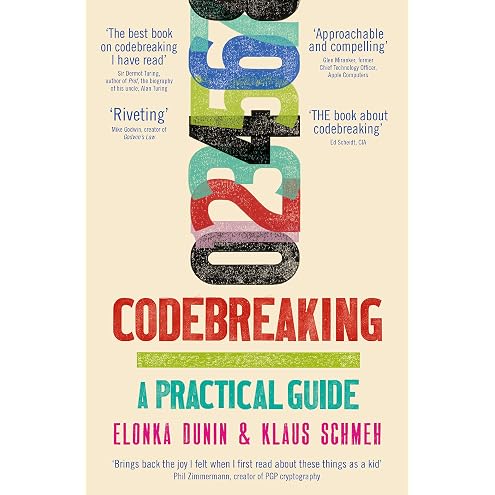
Codebreaking: A Practical Guide
$31.44
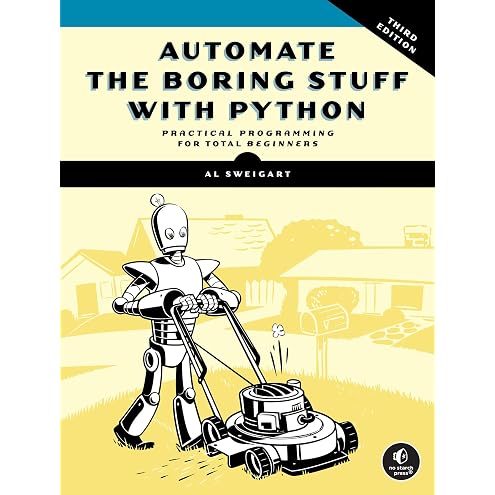
Automate the Boring Stuff with Python, 3rd Edition
$60.93
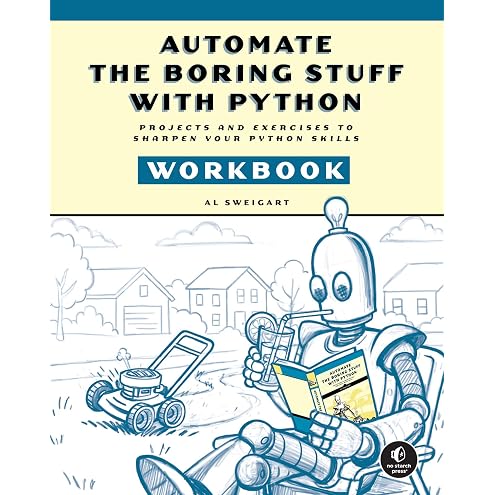
Automate the Boring Stuff with Python Workbook: Projects and Exercises to Sharpen Your Python Skills
$53.39
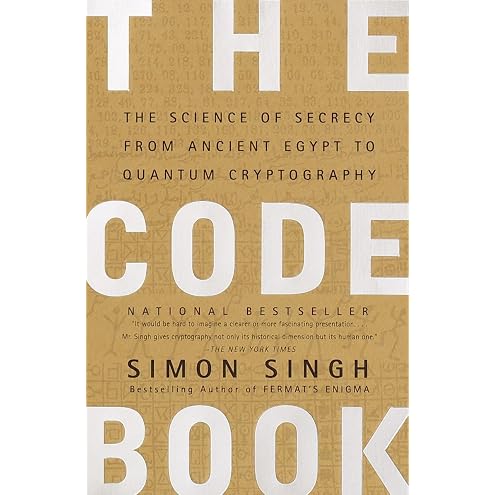
The Code Book: The Science of Secrecy from Ancient Egypt to Quantum Cryptography
$27.28