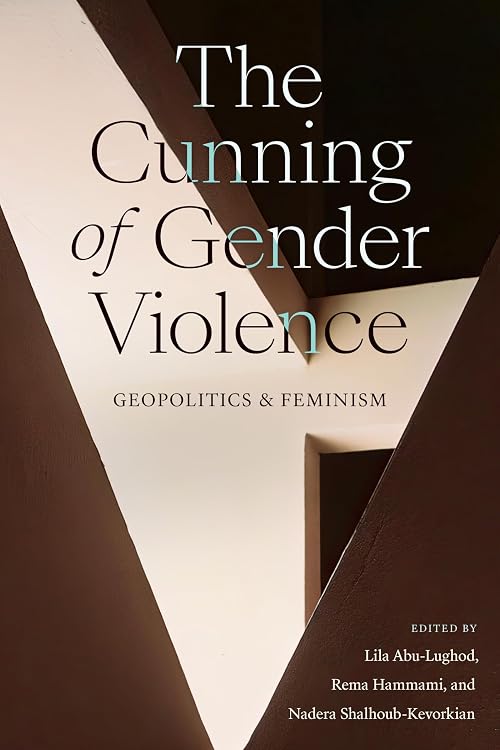
The Cunning of Gender Violence: Geopolitics and Feminism
The Cunning of Gender Violence: Geopolitics and Feminism examines how international policies addressing gender-based violence may become entangled with state power, global security and racialised or religious hierarchies. Its case studies cover several countries and UN and US policies.
At a glance
- Uses case studies on Palestine, Bangladesh, Iran, India, Pakistan, Israel and Turkey, alongside discussion of UN and US policies.
- Questions whether international agendas against violence against women can reinforce systems of power that harm the people they aim to protect.
- Contributors include Lila Abu-Lughod, Inderpal Grewal, Rema Hammami and Leti Volpp.
Reference price: $76.99
Price checked: 18 Nov 2026
View offerAhead of Black FridayExplore the selectionOften bought together
Pros and cons
Pros
- Provides a wide-ranging set of country and policy case studies for readers interested in feminist analysis of global governance.
- Connects gender-based violence debates with religion, racialised ethnicity and international security.
Technical specifications
8 specifications| Publisher | DUKE UNIVERSITY PRESS |
|---|---|
| Publication date | 31 October 2023 |
| Language | English |
| Print length | 480 pages |
| ISBN-10 | 1478020431 |
| ISBN-13 | 978-1478020431 |
| Weight listed | 690 g |
|---|---|
| Dimensions | 15.24 x 2.54 x 22.86 cm |
Who is it for?
A good fit for
- Readers of feminist scholarship, gender studies and international relations.
- Researchers interested in human rights policy, global governance and the politics of violence against women.
Less suited to
- Readers seeking a practical guide, a neutral overview of gender-based violence policy or a short introduction.
Frequently asked questions
What topics does this book address?
It examines feminist approaches to violence against women and gender-based violence in relation to international governance, state violence and global security.
Which regions and policies are discussed?
The description names case studies on Palestine, Bangladesh, Iran, India, Pakistan, Israel and Turkey, as well as UN and US policies.
Who might find it useful?
It is aimed at readers interested in feminist scholarship, gender studies, international relations and human rights policy.