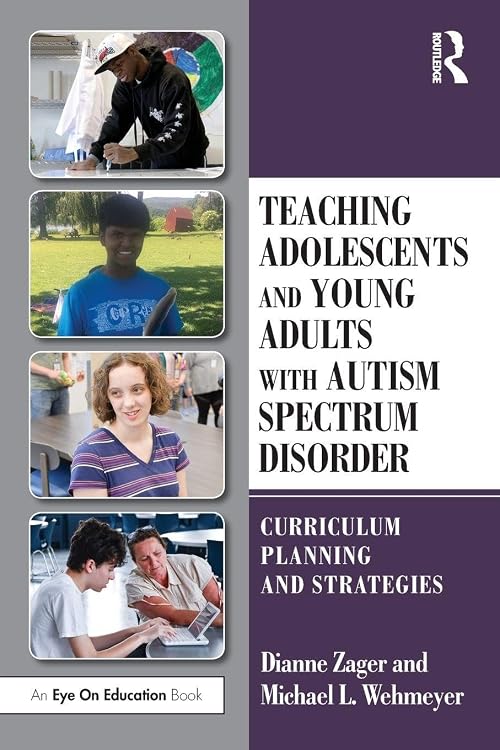
Teaching Adolescents and Young Adults with Autism Spectrum Disorder: Curriculum Planning and Strategies
Curriculum Strategies: Teaching Adolescents and Young Adults with Autism Spectrum Disorder is a Routledge guide to planning education and transition curricula for secondary students with autism. It covers academics, community living, social communication and interaction, and career preparation, with person-centred, student-directed planning and practical vignettes.
At a glance
- Addresses school, work and life beyond secondary education.
- Curriculum topics include community living skills, academics, social communication and interaction, and career preparation.
- Describes person-centred, student-directed planning and incorporates vignettes to illustrate concepts.
- The listing says the guide draws on Universal Design for Learning practices and current research.
Reference price: $74.79
Price checked: 18 Nov 2026
View offerAhead of Black FridayExplore the selectionPros and cons
Pros
- Covers several transition-related curriculum areas in one guide.
- Its student-directed planning focus may help educators shape programmes around individual goals.
- Vignettes offer examples alongside the planning concepts.
Technical specifications
9 specifications| Publisher | Routledge |
|---|---|
| Publication date | 29 November 2019 |
| Edition | 1st |
| Language | English |
| Print length | 210 pages |
| ISBN-10 | 0815379471 |
| ISBN-13 | 978-0815379478 |
| Weight listed | 318 g |
|---|---|
| Dimensions | 15.24 x 1.22 x 22.86 cm |
Who is it for?
A good fit for
- Secondary educators planning curricula for students with autism.
- Therapists and others developing adaptable education or transition programmes.
- Readers seeking strategies spanning academics, community living, social communication and career preparation.
Frequently asked questions
What topics does the book cover?
The listed curriculum areas are community living skills, academics, social communication and interaction, and career preparation.
Who is the guide intended for?
The description positions it for educators, therapists and others preparing secondary students with autism for school, work and life beyond.
Does it include practical examples?
The listing describes helpful vignettes intended to demonstrate concepts in action.