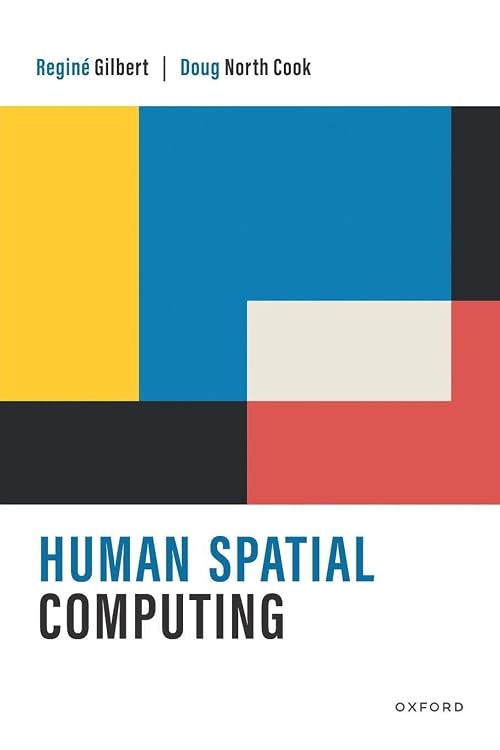
Human Spatial Computing
Human Spatial Computing is an English-language book about the technologies and human considerations behind spatial computing. It covers topics including natural interfaces, haptics, virtual and augmented reality, privacy, safety, ethics and accessibility, with reflection questions and suggested activities in each chapter.
At a glance
- Explores spatial computing approaches including natural interfaces, haptic feedback, virtual reality and augmented reality.
- Discusses the technology's historical roots and contemporary implications, including its role in connecting people during the global pandemic.
- Addresses privacy, safety, ethics, inclusivity and accessibility from different perspectives.
- Chapters include reflection questions and suggested activities for applying concepts.
Pros and cons
Pros
- Combines discussion of spatial-computing technologies with ethical and accessibility considerations.
- Reflection questions and activities provide prompts for students and professional readers to apply the ideas.
Technical specifications
8 specifications| Publisher | Oxford University Press UK |
|---|---|
| Publication date | 31 July 2025 |
| Language | English |
| Print length | 256 pages |
| ISBN-10 | 0192870106 |
| ISBN-13 | 978-0192870100 |
| Weight listed | 440 g |
|---|---|
| Dimensions | 15.6 x 1.52 x 23.39 cm |
Who is it for?
A good fit for
- Undergraduate and graduate students studying spatial computing or related topics.
- Professionals seeking a broad discussion of spatial experiences, ethics and accessibility.
Frequently asked questions
What topics does Human Spatial Computing cover?
The listing describes coverage of spatial-computing technologies such as natural interfaces, haptics, virtual reality and augmented reality, alongside historical context, practical considerations, privacy, safety, ethics and inclusion.
Does the book include activities?
Yes. The listing says each chapter includes questions for reflection and suggested activities to help readers apply the concepts.
Who is the book intended for?
The listing describes it as accessible to undergraduate and graduate students, as well as professionals.