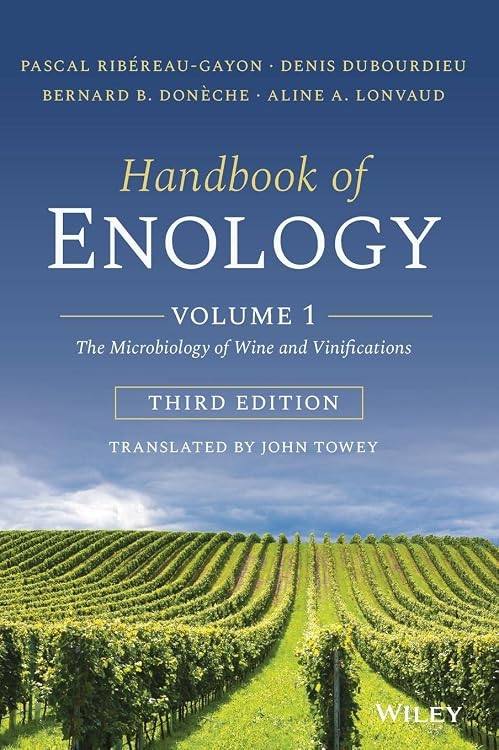
Handbook of Enology, Volume 1: The Microbiology of Wine and Vinifications
Handbook of Enology, Volume 1: The Microbiology of Wine and Vinifications is a scientific reference on grape maturation, wine microorganisms and early winemaking. Its detailed coverage suits enology study and practice, but the 656-page scope is substantial for readers seeking a concise introduction.
At a glance
- Covers wine microbiology, including yeast biology and metabolism, lactic acid bacteria and acetic bacteria.
- Discusses grape quality and maturation, harvesting, post-harvest processing, and red and white vinification.
- Includes coverage of sulfur dioxide and products and processes used in addition to it.
- The listing describes this as the third English edition and an enhanced translation of the 2017 French edition.
Reference price: $325.95
Price checked: 18 Nov 2026
View offerAhead of Black FridayExplore the selectionPros and cons
Pros
- Connects microbiology with practical winemaking topics, including fermentation monitoring and wine stabilization.
- Its extensive subject coverage is aimed at advanced students, researchers and working grape growers and vintners.
Cons
- The detailed 656-page format may be more than needed for readers looking for a quick, introductory overview.
Technical specifications
9 specifications| Publisher | Wiley |
|---|---|
| Edition | 3rd |
| Publication date | 22 April 2021 |
| Language | English |
| Print length | 656 pages |
| ISBN-10 | 111958468X |
| ISBN-13 | 978-1119584681 |
| Weight listed | 1.1 kg |
|---|---|
| Dimensions | 18.03 x 4.06 x 25.65 cm |
Who is it for?
A good fit for
- Advanced viticulture and enology students, professors and researchers.
- Practicing grape growers, winemakers and vintners seeking detailed microbiology and vinification reference material.
Less suited to
- Readers who want a short, nontechnical introduction to wine or winemaking.
Frequently asked questions
What topics does Volume 1 cover?
It covers wine microbiology, yeast biology and metabolism, lactic and acetic bacteria, grape maturation and processing, sulfur dioxide, and red and white vinification.
Who is this book intended for?
The listing identifies advanced viticulture and enology students, professors, researchers, grape growers and vintners as its intended readers.
Is this the third English edition?
Yes. The listing describes it as the third English edition and an enhanced translation of the 2017 French edition.