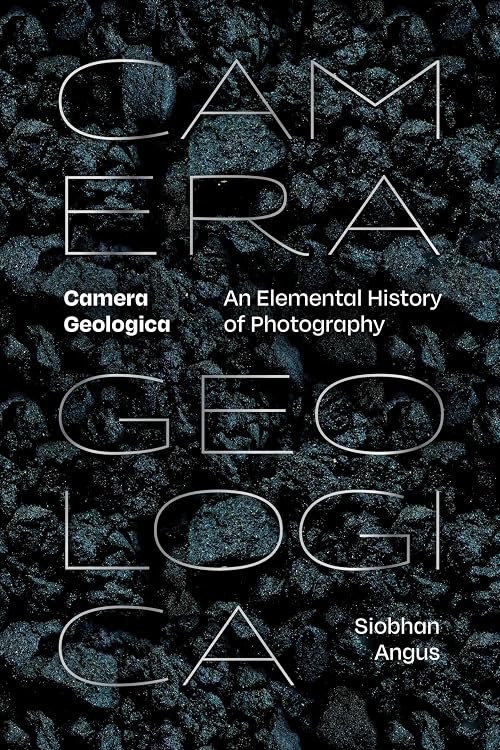
Camera Geologica: An Elemental History of Photography
Camera Geologica: An Elemental History of Photography by Siobhan Angus traces photography through the minerals and extractive industries that support image-making. Its materials-focused account connects photography’s history with mining, labour, colonisation and environmental degradation, including links between nineteenth-century and digital photography.
At a glance
- Follows photography’s dependence on minerals including bitumen, silver, platinum, iron, uranium and rare earth elements.
- Connects photographic image-making to mining, resource extraction and global extractive capitalism.
- Discusses histories of colonisation, labour and environmental degradation through visual culture.
- Places nineteenth-century photography in dialogue with digital photography.
Reference price: $61.99
Price checked: 19 Nov 2026
View offerAhead of Black FridayExplore the selectionOften bought together

Pros and cons
Pros
- A materials-driven approach makes the resource requirements behind photographic media central to its history.
- The scope links photographic practice with wider economic, geopolitical and environmental systems.
Technical specifications
8 specifications| Publisher | DUKE UNIVERSITY PRESS |
|---|---|
| Publication date | 20 June 2024 |
| Language | English |
| Print length | 328 pages |
| Dimensions | 15.24 x 2.03 x 22.86 cm |
|---|---|
| Weight listed | 567 g |
| ISBN-10 | 1478030186 |
|---|---|
| ISBN-13 | 978-1478030188 |
Who is it for?
A good fit for
- Readers interested in photography history and visual culture.
- Readers exploring mining, resource extraction and the environmental or social contexts of image-making.
Less suited to
- Readers seeking a practical photography manual or a primarily technical guide to taking photographs.
Frequently asked questions
What is Camera Geologica about?
It examines photography through the minerals and extractive industries that underpin image-making, connecting photographic history with mining, labour, colonisation and environmental degradation.
Does the book discuss digital photography?
Yes. The description says it places nineteenth-century photography in dialogue with digital photography and their connected economies of extraction.
Who published the book, and how long is it?
The listed publisher is DUKE UNIVERSITY PRESS, and the print length is 328 pages.