 1 / 3
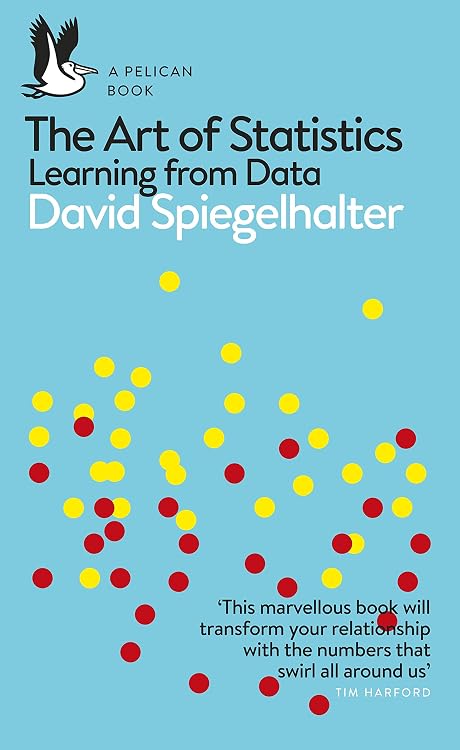
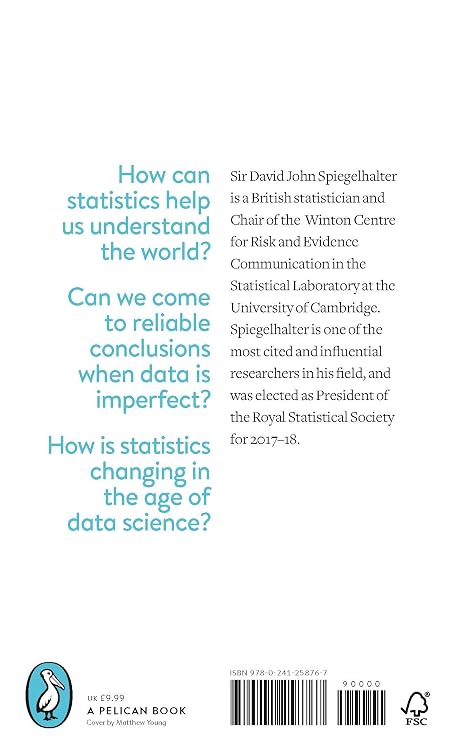
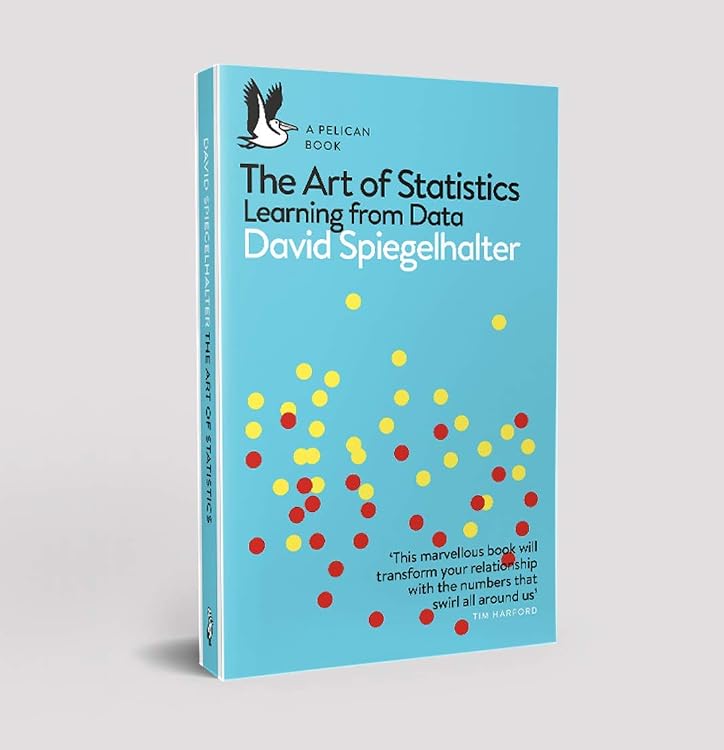
The Art of Statistics: Learning from Data
The Art of Statistics: Learning from Data by David Spiegelhalter introduces statistical thinking through real-world questions and examples. It covers interpreting evidence, recognising bias and putting risk claims into context, making it a substantial read for general readers who want to understand how conclusions are drawn from data.
At a glance
- Explains how statistical reasoning can be used to derive knowledge from data.
- Uses examples involving health studies, surveys, hospitals and risk communication.
- Discusses why an observed association does not by itself show that one factor caused another.
Often bought together


Pros and cons
Pros
- Real-world examples give statistical concepts practical context.
- The description frames the book as an accessible guide to statistical literacy for general readers.
- At 448 pages, it offers a substantial treatment rather than a brief primer.
Technical specifications
9 specifications| Publisher | Penguin Press |
|---|---|
| Publication date | 18 February 2020 |
| Edition | 1st |
| Language | English |
| Print length | 448 pages |
| ISBN-10 | 0241258766 |
| ISBN-13 | 978-0241258767 |
| Weight listed | 261 g |
|---|---|
| Dimensions | 11.1 x 2.6 x 18 cm |
Who is it for?
A good fit for
- Readers seeking an accessible introduction to statistical reasoning and interpreting claims based on data.
- People interested in how bias, risk and correlation affect conclusions in research and media.
Less suited to
- Readers looking specifically for a technical workbook, software tutorials or hands-on data-analysis exercises, which are not established by the listing.
Customer reviews on Amazon
- 5 stars
70% 70% - 4 stars
21% 21% - 3 stars
7% 7% - 2 stars
1% 1% - 1 star
1% 1%
Customer feedback describes the book as an engaging, easy-to-follow resource that explains underlying principles well, including as an in-depth introduction for lay readers. That reception may suit readers approaching statistical ideas through prose and examples, though the listing does not establish that it is a software or exercise-based course. Aggregate ratings are broadly favourable, but ratings alone do not explain individual readers’ reasons.
Positive themes
- Customers describe the explanations of statistical principles as clear and the reading experience as engaging.
- Feedback characterises it as an accessible, in-depth introduction for lay readers.
Frequently asked questions
What is The Art of Statistics about?
It introduces statistical principles for drawing knowledge from data, using real-world questions and examples. The description includes topics such as bias, medical screening, surveys, risk and the interpretation of hospital outcomes.
Is this presented as a beginner-friendly book?
The listing presents it as a guide to statistical literacy, and customer feedback describes it as easy to follow and suitable as an in-depth introduction for lay readers.
How long is the listed edition?
The product details list 448 pages.
Does the book teach data analysis software?
The supplied description focuses on statistical concepts and real-world interpretation. It does not establish software instruction or practical coding exercises.
Alternative options
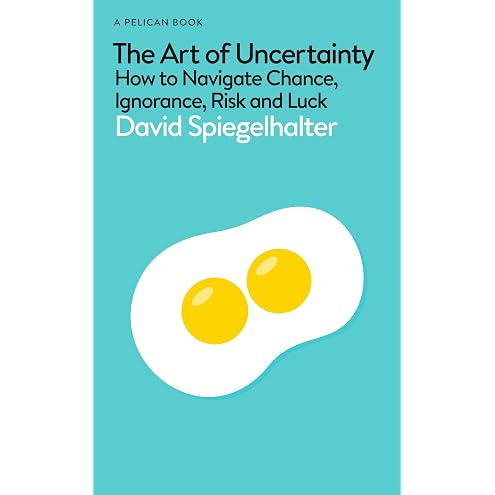
The Art of Uncertainty: How to Navigate Chance, Ignorance, Risk and Luck
$38.90
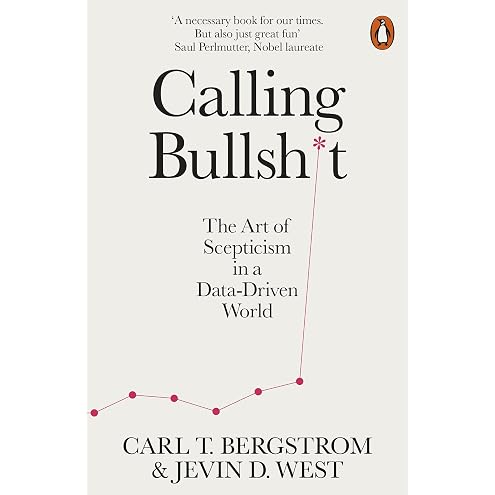
Calling Bullshit: The Art of Scepticism in a Data-Driven World
$22.94
Why Machines Learn: The Elegant Maths Behind Modern AI
$23.50
Algorithms to Live By: The Computer Science of Human Decisions
$19.54
Statistics without Tears: An Introduction for Non-Mathematicians
$20.75
Data Analysis in Microsoft Excel: Deliver Awesome Analytics in 3 Easy Steps Using VLOOKUPS, Pivot Tables, Charts And More
$32.99

Agentic Architectural Patterns for Building Multi-Agent Systems: Proven design patterns and practices for GenAI, agents, RAG, LLMOps, and enterprise-scale AI systems
$100.47
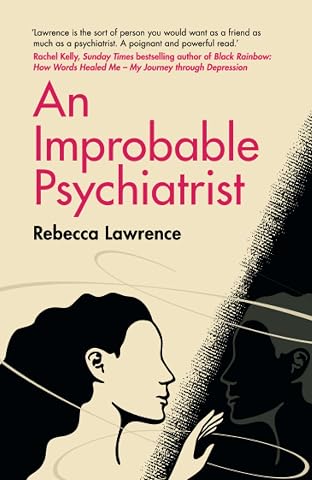
An Improbable Psychiatrist
$31.84
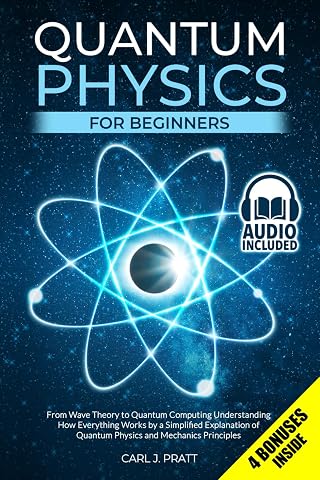
Quantum Physics for Beginners: From Wave Theory to Quantum Computing. Understanding How Everything Works by a Simplified Explanation of Quantum Physics and Mechanics Principles
$25.65
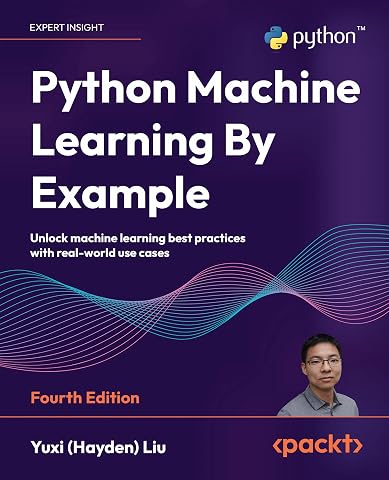
Python Machine Learning By Example: Unlock machine learning best practices with real-world use cases
$63.99

Build with Claude Code: From zero to deployed apps with AI-assisted development
$68.99
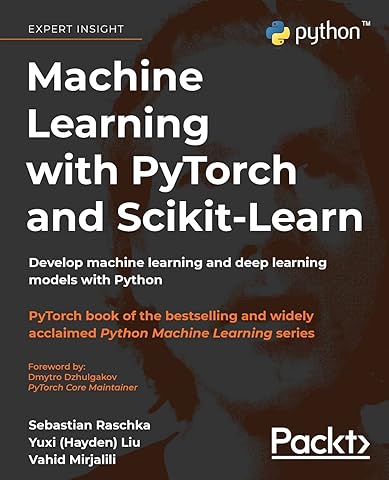
Machine Learning with PyTorch and Scikit-Learn: Develop machine learning and deep learning models with Python
$75.99